
| Call Us (Toll Free) | | |  | 8772615387 | | |  | 91-9910903434 |


Qutub Festival, Delhi |
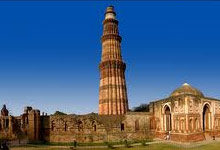
An Annual Tribute  The foundation of the Qutub Minar was laid by the Afghan invader, Qutub-ud-Din Aibak in 1199 AD as a mark of his conquest of Northern India. The two storeyed structure was a part of the palace complex he erected, along with a mosque in the premises. So, probably the tower was meant for the muezzin (the priest), to give the azaan (call) for prayers. It is also said that the minar was designed ‘to cast the shadow of God over the east and the west’ as the imposing structure casts a long and impressive shadow at sunrise and sunset. Later in 1211-36AD, three more storeys were added to it by his successor and son-in-law, Shamsu`d-Din ‘lltumish. The structure was then repaired by Feroz Shah Tughlaq (1351-88 AD)and again by Sikandar Lodi (1489-1517 AD). With time, the Minar served as an excellent watchtower for spotting approaching invaders. Consequentially, the minar has come to be a document in history, recording the metamorphoses of the Indian culture and the different influences in architecture brought in by the relay of foreign rulers. Although many hands and minds have been responsible for the design of the Qutub Minar, there remains a certain rhythm to the structure. The patterns on each storey differ a little from the other and so does the building material. All the storeys are surrounded by a projected balcony encircling the minar and supported by stone brackets. They are decorated with honey-comb design and numerous intricate inscriptions in Arabic and Devnagari all over, displaying a fine example of skill on stone. Qutub Minar, today, stands as a salvaged ruin against the ravages of history. Due to accidents in the narrow and difficult stairway, and some stray incidents of suicides, entry to the Minar is now restricted to the courtyard. The closure of the minar was also a result of the general decay of human discipline in the country, which saw some modernistic(!) scriblings, called vandalism by the Archaeological Survey of India (ASI), who were fighting a losing battle trying to preserve this heritage monument. As a part of the ‘resurrection’ process, during the months of November-December, a 3-day festival is held in the premises of this historical structure. This festival, known as the Qutub Festival, not only showcases the cultural art forms of the country but also puts this classic structure in the cynosure of national and international attention. Set amidst the historical background of the Minar, a number of cultural events are held as a part of the Festival, where veterans of Indian classical music and folk musicians give spectacular performances. The towering Qutab Minar wears a new look as the three-day Qutub Festival of dance and music begins, charming tourists from all over. The Festival is a joint venture of the Delhi Tourism & Transport Development Corporation and Sahitya Kala Parishad.The regional food stalls set up at the complex serve local cuisine of Delhi, Madhya Pradesh, Maharashtra and the northeastern states, adding to the cultural extravaganza. Music fills the air by this 12th century landmark. There are Kuchipudi, Odissi, Manipuri, and various classical dance performances by famous artists from all over the nation. Sarangi and sitar recitals mesmerise the audience, while ghazals and qawwalis mark the end of the festival. Artists like the illustrious three generations of Sarabai Family- Mrinalini, Mallika & Anahita Sarabai, ghazal maestros - Ustaad Ahmad Hussain and Ustaad Mohammad Hussein, Odissi dansuese Sonal Mansingh, santoor player Bhajan Sopori, Guru R.K. Singhajit Singh with his troupe of Manipuri dancers, Kuchipudi duo Jairama and Vanshree Rao and sarangi players, Ram Narayan and Aruna Narayan Kalehave have performed here too. The Qutub Festival is an attempt to preserve and present the rich tradition of Indian music,contemporary as well as classical. It is surely an exotic experience for those seeking to have a glimpse of the cultural extravaganza that is India. |


